

It’s been looming over me since I first started running in 2023: When will my age catch up with me and take away the one thing that has saved me? When will perimenopause start to affect my progress?
Perhaps you’ve wondered something similar about a sport, a passion, or an ability that has become an important part of who you are. How long will you be able to keep doing the thing that makes you feel most like yourself?
I’d heard all the stories from other women, but somehow I thought I was different. I was going to be the exception to the rule.
It began as a way to lose the unwanted pounds that had crept up in middle age. Running consistently three times a week alongside a dramatic change in my eating habits led to a 15-pound weight loss.
Then it became a way to reclaim a space of my own and learn what the word boundary meant. When my young adult children, or my partner, “needed” my presence for something they could manage on their own, I continued with my scheduled runs anyway. They were appointments with myself, in my calendar, that deserved just as much respect as any other appointment. That was the first time in my life I honored my own spiritual needs.
In 2024, running showed me that I was capable of so much more than my mind had made me believe my whole life. I crossed the finish line of a half marathon in 2:07 and decided I wasn’t finished.
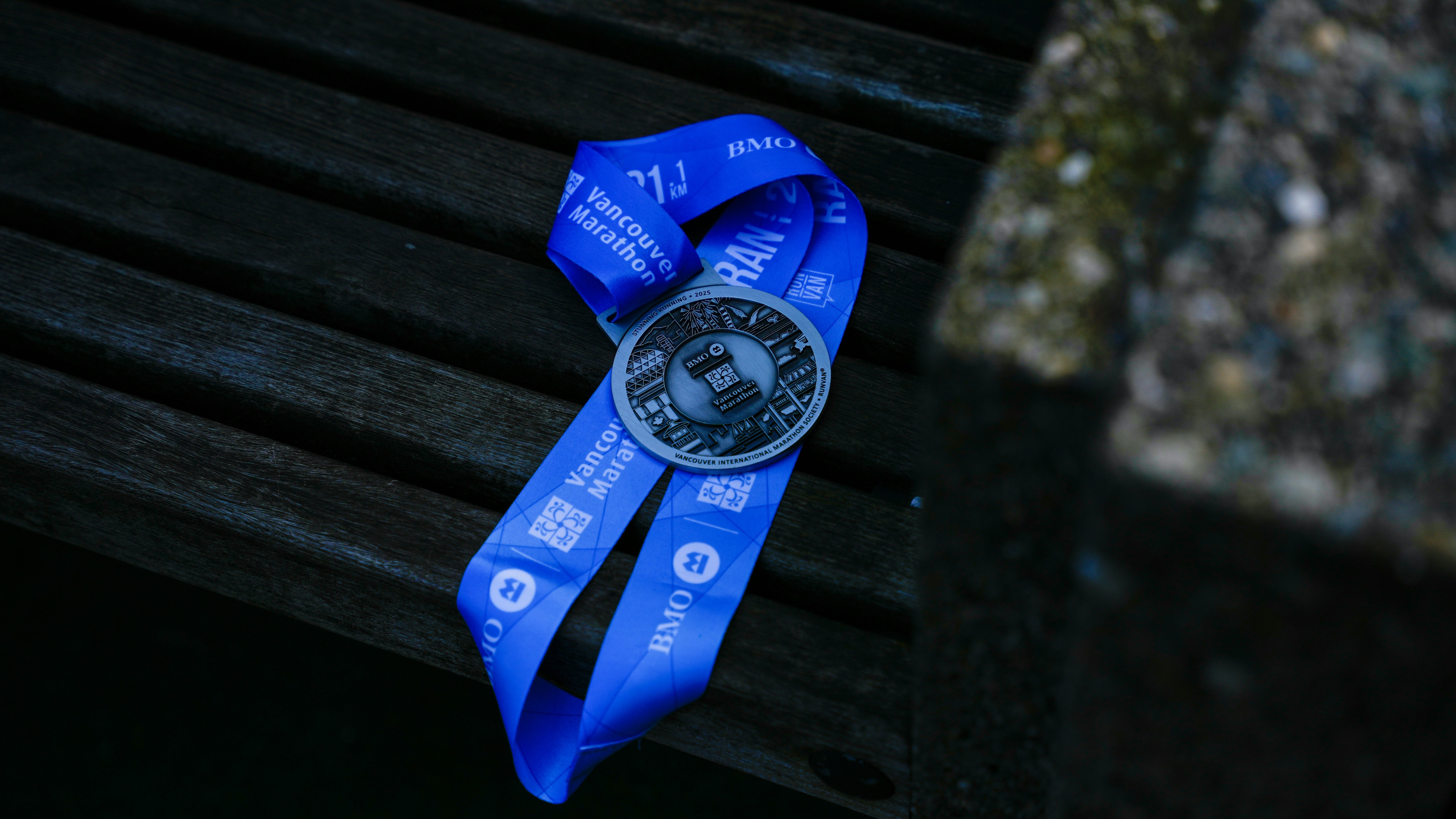
Then, in 2025, I took on my first marathon in 4:44:54. Training pushed my physical limits and tested the balance I’d been trying to find between running and the people I love. When I crossed the finish line, overwhelmed with joy, I knew immediately this wouldn’t be a one-and-done experience. I was in it for the long run, pun intended.
I went on to race once a month and ended the year with a half marathon personal best of 1:55:46—more than 11 minutes faster than I’d run the year before.
After that race, I felt like a warrior. Walking into work the following Monday, still floating from my accomplishment, I proudly shared my achievement with a colleague.
“Congratulations,” he said. “You have now entered a new category of half marathon runners.”
I’d seen a ton of women on social media, older than me and some who had started running later in life, breaking 1:50, even 1:45, in the half marathon. So why couldn’t I? I was certain I was on the road to massive progress. I opened the “race goals” notepad in my Kindle Scribe and wrote 1:53 for my next half marathon personal best.
My second marathon was scheduled for May 30, 2026, just as Europe was entering its first of several heat waves over the summer. Based on my half marathon performance, my running app predicted a 4:05 marathon. Deep down, I knew this was ambitious, but I wanted to believe it.
The training block had been superb. Unlike before my first marathon, I wasn’t struggling with fatigue. I’d found a balance between training and spending time with my loved ones, all while increasing my running from three to four days a week. Even my metrics, including heart rate variability (HRV) and resting heart rate, remained reassuringly close to or above baseline. I’d also been lifting heavy twice a week and could feel the difference in strength.
On race day I made the rookie mistake of going out too fast for my ability. The heat and rolling hills in Stockholm caught up with me. I didn’t even make it to mile 20 before I hit the wall.
Even so, I ran a marathon personal best of 4:32:23, improving my previous time by 12 minutes. But something else was happening, too. My body was starting to feel different.
Since the beginning of 2026, breaking two hours in a half marathon hasn’t come easily. Most of my races have been closer to 2:01, despite training more consistently and at higher speeds. I even added a fifth run to my weekly volume, hoping to give myself the best possible chance to progress.
I’ve also been haunted by niggles. My IT band pain, which had been dormant for nearly two years, decided to wake up this past summer, even though I’ve rarely missed a day of strength training and have glutes of steel.
And now my insertional Achilles tendinopathy, which has affected me on and off for years, has flared up, causing me to limp out of bed each morning.
My love for the sport hasn’t died. Each time a runner passes me on the street, I want to lace up my shoes and head for the Seine embankments. I can’t think of anything more pleasant than a crisp autumn morning run through the Bois de Boulogne, followed by a warm slice of homemade pumpkin bread and a latte when I get home.
I’m still just as excited before each race as I was a few years ago, my stomach full of dancing butterflies as I wait for the starting gun, the music pumping in the background.
And I don’t care what anyone says: the absolute best sensation in the world is a hot shower after a long, hard race.
Last weekend was my fall goal half marathon in Antwerp, Belgium. My training plan had me on track for a 1:54 finish, so I can’t help feeling a little disappointed with my time of 2:00:25.
My strength has always been in the final kilometers, when I dig deep into myself and pull out some kind of secret weapon to give it everything I’ve got. Around kilometer 13, I glanced at my watch and thought I still had it in me to finish in 1:57 or 1:58. But somewhere around kilometer 17, I felt it slipping away.
I’d slept just five and a half hours for two consecutive nights after three particularly demanding weeks at work, and I’d clocked 20,000 steps sightseeing the day before the race. Maybe those are mere excuses. If I’m being honest, my superpower has felt out of reach ever since my marathon last spring and I can’t seem to find a way to get it back.
The hardest part isn’t the slower times, the injuries, or even the possibility that perimenopause is beginning to affect my running. It’s that I believed I was making progress in something I was finally good at.
Maybe you know that feeling: finding something that restores your confidence, something that makes you feel capable again, only to wonder what happens when it no longer comes as easily. The fear isn’t always about losing the ability itself. Sometimes it’s about losing what that ability has come to mean.
But now I’m wondering whether I have to renegotiate that relationship.
I don’t want to give up on getting faster. I still want to run a half marathon in 1:53. I still plan on running another marathon in Copenhagen in May 2027 and discover what I can do. I don’t want to use my age as an excuse before I’ve even given myself a chance.
But I also don’t want to spend the next decade fighting my own body, treating every slower race as a failure and every niggle as evidence that my time is running out.
I started running in 2023 fully aware that age would eventually catch up with me. Maybe it already has, in ways I don’t yet understand. Or maybe I’m asking my body to do too much, too soon, while expecting it to respond exactly as it did a few years ago.
What I do know is that I still want to be out there. I still want the early mornings, the Seine embankments, the feeling of finding a rhythm and settling into it. I want to feel strong again, not just on race day but in the ordinary miles that make up the weeks between races.
My next chapter of running may be less about proving that I’m the exception to the rule and more about learning a new set of rules.
I’m not ready to stop chasing my potential. I just need to figure out how to chase it without losing the joy that brought me here in the first place.
And that’s a question worth asking beyond running:
How do we keep reaching for what we want as we get older, without turning every setback into evidence that our best days are behind us?
If you’re looking for more movement in the areas where you may feel stuck—in your body, your finances, or your sense of who you are becoming—I’d love for you to join me on The Parisirun.
Together, we’ll explore new perspectives, challenge old beliefs, and find practical ways to build a more intentional life and create a midlife in motion.
You can start with 10 Questions for an Unwritten Life, my first workbook, available when you subscribe.